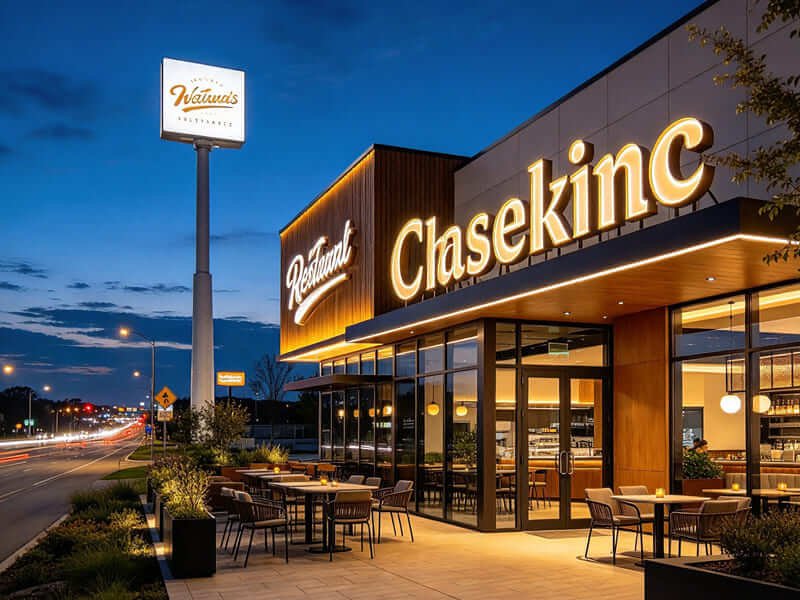
Why Commercial Properties Choose Aluminum: Durability, Rust Resistance, and Lifecycle Value
Aluminum signs are the primary choice for exterior branding because they contain zero iron, making them naturally rust-proof and weatherproof. They offer the strength of steel at one-third the total weight, withstand extreme temperature shifts without cracking, and deliver an outstanding lifespan of ten to twenty years with minimal maintenance.
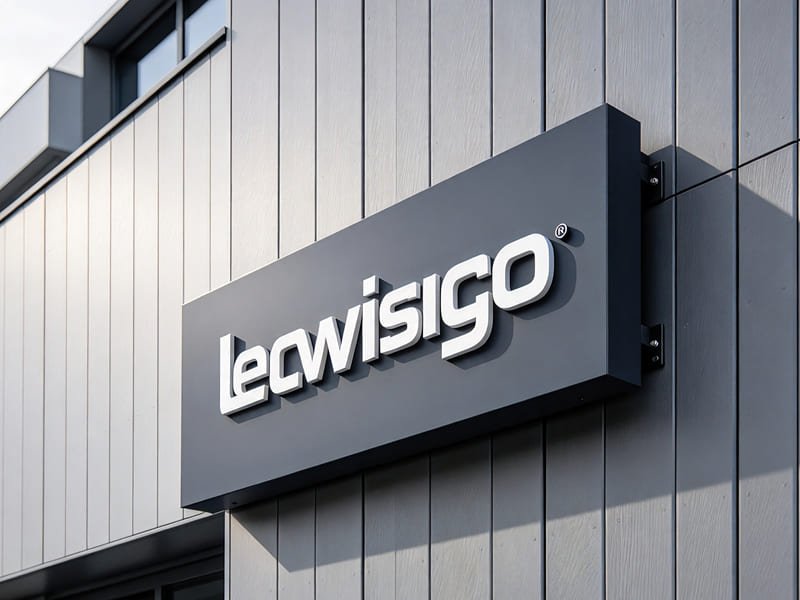
In modern sign fabrication, aluminum accounts for approximately 70 percent of all custom metal projects. The reason is simple: it solves the greatest vulnerability of outdoor displays, which is moisture damage. Traditional steel signs are exceptionally strong, but the moment a tiny scratch penetrates their paint, water triggers rust. That rust gradually expands, flakes the coating away, and leaves ugly streaks down exterior masonry. Aluminum avoids this entire failure chain.
Does Aluminum Ever Rust or Rot Outdoors?
Aluminum contains no iron, meaning it physically cannot rust. Instead, when bare aluminum meets oxygen in the atmosphere, it quickly forms a microscopic, transparent skin of aluminum oxide. This thin film creates an impermeable shield that prevents deeper environmental corrosion from reaching the core metal. If an aluminum sign panel gets scratched by a flying pebble or drilled on an installation ladder, it does not deteriorate. The exposed raw metal simply oxidizes into a quiet, dull-gray protective surface that halts oxidation in its tracks.
This natural chemical trait makes aluminum sign material exceptional for high-salinity coastal areas, rainy climates, and snow-heavy regions. Wood signs eventually absorb water, leading to internal rot, splitting, and insect damage. Rigid plastics like acrylic and PVC become brittle and crack during harsh freeze-thaw cycles. Aluminum remains stable through scorching desert summers and freezing winters, retaining its structural integrity year after year.
Key Commercial Alloys: 5052, 6061, and 3105 Explained
Not all aluminum sheets are identical. Industrial sign factories select specific alloys depending on whether the project requires intricate cutting, heavy structural stiffness, or maximum resistance to coastal salt fog. The most common sign alloys include:
- Alloy 5052 (5052-H38): Known across the trade as marine-grade aluminum. It contains magnesium as its primary alloying element, giving it superior resistance to marine salt spray, high fatigue strength, and excellent formability. It is the primary alloy specified for premium outdoor business logos and heavy-duty roadway signage.
- Alloy 6061: An architectural, structural-grade alloy hardened with magnesium and silicon. It is nearly as strong as structural carbon steel while remaining three times lighter. Sign makers turn to 6061 for heavy structural brackets, large overhead framing, and freestanding post assemblies.
- Alloy 3105: A cost-efficient alloy that integrates a high percentage of recycled content while providing reliable temper and corrosion resistance. It is widely used for standard municipal sign blanks and parking enforcement boards.
- Alloys 1100 and 3003: Softer, commercially pure and manganese-alloyed sheets. They are pliable, easy to bend, and work well for simple stamped panels and interior decorative markers.
- Foundry Alloy 365: A specialized lead-free and mercury-free casting alloy poured at extreme temperatures to craft thick, dimensional bronze-alternative plaques.
Environmental Sustainability and Recyclability
Corporate sustainability goals are now a central factor in architectural planning. Solid aluminum is one of the most eco-friendly sign materials in the world. It is 100 percent recyclable and can be melted down and re-manufactured indefinitely without losing any of its physical properties. Recycling aluminum requires only about 5 percent of the energy needed to produce virgin metal from raw bauxite ore. Unlike disposable corrugated plastic yard signs or petroleum-heavy PVC boards that fill up landfills, aluminum signs remain valuable architectural assets that can be completely reclaimed at the end of their operational lifecycle. To explore how different metal compositions shape exterior durability, consult our comprehensive exterior signage metal materials guide.
Substrate Engineering: Solid Aluminum Sheet vs. Aluminum Composite Material (ACM / Dibond)
Solid aluminum is a single homogeneous metal sheet that delivers maximum impact resistance and non-combustible safety. Aluminum Composite Material (ACM), widely known as Dibond, features a high-density polyethylene core sandwiched between two pre-finished aluminum skins, delivering maximum surface flatness with 50 percent less weight.
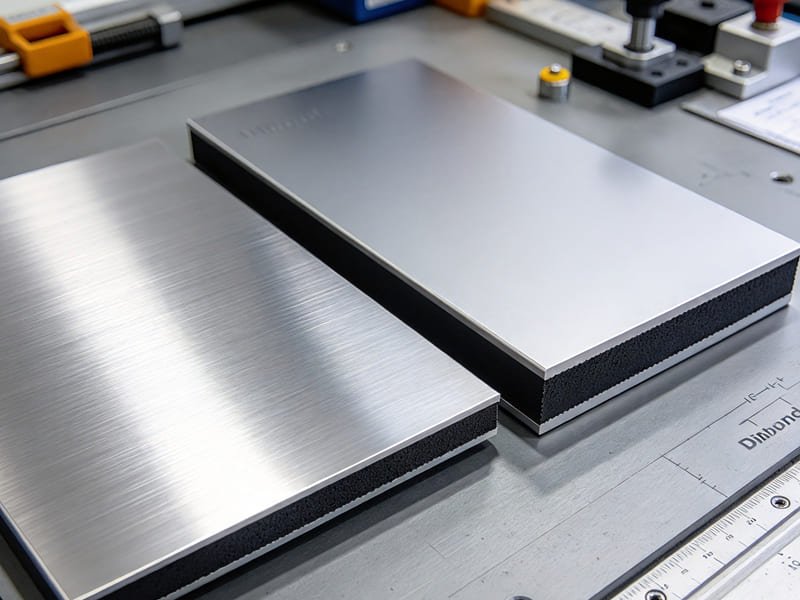
When specifying a metal sign, one of the first engineering decisions is choosing between a solid aluminum sheet and an aluminum composite material panel. Both options are rust-proof, but their structural behaviors, weight ratings, and fabrication capabilities differ significantly.
The Structure of Solid Sign-Grade Aluminum
Solid sign aluminum is manufactured from a single, continuous sheet of metal alloy. It is exceptionally dense, completely fireproof, and difficult to puncture. If your sign will live in a high-traffic urban setting where shopping carts, stray tools, or deliberate vandalism might hit it, solid aluminum is the superior choice. It absorbs mechanical impacts without cracking. Solid aluminum can also be formed, bent, welded, and waterjet cut into intricate shapes. However, because it is solid metal, very large single sheets can expand in the summer sun, causing subtle surface waves unless adequately supported.
The Anatomy of Aluminum Composite Material (ACM)
Aluminum Composite Material, frequently known under brand names like Dibond, E-Panel, or Alucobond, takes inspiration from architectural sandwich panel engineering. An ACM panel consists of two thin aluminum skins, typically 0.008 to 0.012 inches (0.2 to 0.3 mm) thick for standard signage, or up to 0.020 inches (0.5 mm) for architectural facades, permanently heat-bonded to a solid polyethylene thermoplastic core. Standard sheets are 3 mm (about 1/8 inch) or 6 mm (about 1/4 inch) thick.
The engineering beauty of ACM lies in its rigidity-to-weight ratio. The outer aluminum layers handle tensile and compressive stresses, while the plastic core keeps them separated, creating a beam-like structure. ACM weighs roughly half as much as a solid aluminum sheet of identical stiffness. More importantly, it maintains museum-grade visual flatness over large spans, eliminating the ripples that can appear on wide metal signs. It can be cleanly routed and folded into three-dimensional sign trays, though it cannot be welded like solid metal. For an in-depth side-by-side analysis, read our dedicated technical guide on solid aluminum vs. Dibond ACM signs.
Surface Finishes: Baked Enamel White, Brushed Metal, and Anodized Coatings
The underlying metal canvas dictates how graphics look and hold up under direct sunlight:
- Pre-Painted Baked Enamel White: Solid aluminum and standard ACM sheets typically come from the rolling mill pre-treated with a baked-on white polyester coil coating on both sides. This coating creates a flawless, semi-gloss primer that accepts full-color inks and provides a clean, bright white background.
- Brushed Aluminum: Instead of white paint, the bare aluminum passes through abrasive wheels to create a continuous, fine satin metallic texture. Brushed aluminum signs give reception areas, executive suites, and boutique facades an upscale architectural aesthetic. When printing on brushed panels, white ink must be planned as a spot color; otherwise, white areas in your graphic will let the raw silver grain shine through.
- Anodized Aluminum: Produced through an electrochemical acid bath that grows a sapphire-hard oxide layer on the metal surface. Anodized coatings cannot peel, flake, or blister because they are chemically integrated into the metal itself. They resist scratches and provide a perfect contrast when engraved with fiber lasers.
- Alumalite Panels: A variant featuring aluminum skins bonded to a corrugated, fluted polypropylene plastic core. It is exceptionally light, stiff, and primarily chosen for large real estate signs and post-and-panel billboard displays.
Retroreflective Grades for Low-Light Road and Safety Signs
Signs that must guide vehicles after dark cannot rely on standard paint alone. Standard aluminum does not bounce light back on its own. To achieve nighttime visibility, factories laminate specialized retroreflective vinyl sheeting onto alodized conversion-coated aluminum blanks before printing. The sheeting contains microscopic glass beads or micro-prismatic cubes that catch headlight beams and reflect them directly back to the driver:
- Engineer Grade (ASTM Type I): The standard reflective option, providing reliable visibility for private parking lots, warehouse facilities, and residential speed warnings with an outdoor lifespan of 5 to 7 years.
- High-Intensity Prismatic (HIP, ASTM Type III/IV): Utilizing micro-prismatic technology, HIP is roughly three times brighter than engineer grade and lasts 10 years. It is the mandated standard for municipal traffic signs and street names across North America.
- Diamond Grade (DG3, ASTM Type XI): The highest level of optical retroreflection, returning up to 60 percent of light to the driver. Required for critical interstate overheads, pedestrian crosswalks, and high-speed stop signs. Detailed rules are explored in our guide to MUTCD traffic sign thickness and retroreflective standards.
| Substrate Option | Core / Structure | Standard Thickness | Weight (lb/sq.ft) | Outdoor Lifespan | Best Applications |
|---|---|---|---|---|---|
| Solid Aluminum | 100% Homogeneous Alloy | .040″ to .125″ | 0.56 to 1.75 | 15 to 20+ Years | Road signs, safety notices, high-impact areas |
| Dibond / ACM | Polyethylene Plastic Core | 3 mm (1/8″) to 6 mm | 0.76 to 1.53 | 10 to 15 Years | Storefront fascia, architectural panels, wall art |
| Brushed Aluminum | Solid or ACM Metal Face | .032″ solid or 3 mm ACM | 0.55 to 0.76 | 7 to 10+ Years | Corporate lobbies, directories, upscale boutiques |
| Alumalite | Corrugated Fluted Plastic | 1/4″ to 1/2″ | 0.85 to 1.20 | 5 to 8 Years | Post-and-panel site boards, real estate listings |
| Reflective Aluminum | Solid Alloy + Prismatic Film | .080″ to .125″ | 1.15 to 1.78 | 10 to 12 Years | Traffic control, parking lots, 24/7 emergency signs |
Thickness and Gauge Standards: Selecting the Right Gauge for Structural Rigidity
Aluminum sign thickness is measured in decimal thousandths of an inch rather than traditional wire gauge numbers. Common commercial thicknesses run from lightweight .040 inch panels for small wall signs up to heavy-duty .125 inch plates for large highway boards and open high-wind structures.
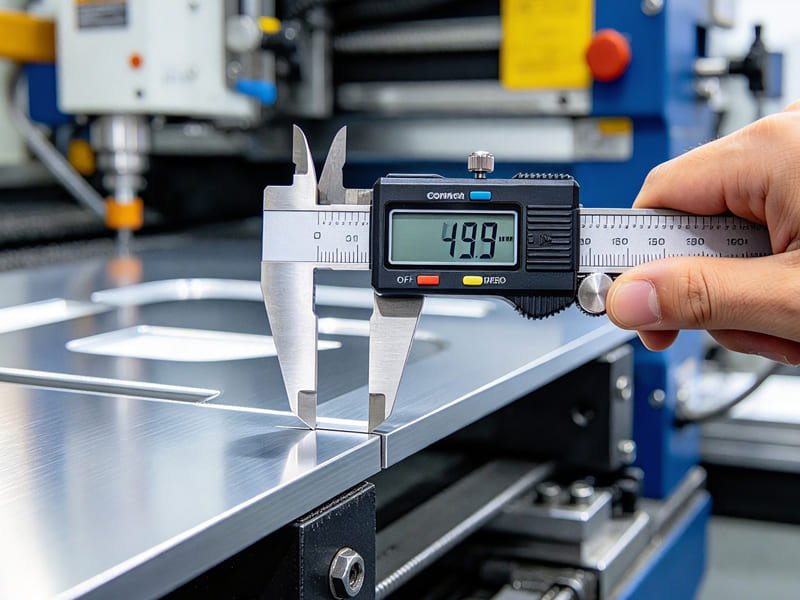
A frequent mistake in sign purchasing is assuming that gauge reflects print quality. It does not. An image printed on thin metal looks just as vibrant as one on a heavy plate on day one. Gauge is strictly a mechanical stiffness and wind-load decision. Selecting the wrong thickness leads directly to oil-canning, bent corners, and rattling failures.
Decimal Thickness Breakdown: From .032 to .125 Inch Sheets
The signage trade specifies solid sheet aluminum by its true decimal measurement. To understand which thickness fits your environment, review these standard industry benchmarks:
- .032 Inch (~0.81 mm / ~0.556 lb/sq.ft): The thinnest commercial grade. It is lightweight, flexible, and economical. Ideal for small interior door plaques, locker markers, equipment labels, and framed indoor directories. It should never be mounted unsupported outdoors.
- .040 Inch (~1.02 mm / ~0.58 lb/sq.ft): The standard commercial entry point. It provides solid rigidity for panels up to 18 by 24 inches when mounted flush against a flat wall, building facade, or chain-link fence. If you mount a .040 panel larger than two by three feet using only corner screws, the center will flex in moderate breezes.
- .063 Inch (~1.60 mm / ~0.88 lb/sq.ft): The commercial standard workhorse. Commonly specified for directional signage, parking signs, real estate markers, and medium-format building displays. It is sturdy enough to mount onto central U-channel posts without buckling when wind pushes against the face.
- .080 Inch (~2.03 mm / ~1.13 lb/sq.ft): The municipal street sign standard. Specified by the Federal Highway Administration and local Department of Transportation (DOT) offices for street name blades, standard stop signs, and public safety boards up to 36 inches wide. It resists vandalism and holds its shape through violent storms.
- .100 to .125 Inch (1/8 inch / ~3.18 mm / ~1.75 lb/sq.ft): Heavy-duty industrial plate. Used for highway guide signs over 36 inches, bridge markers, coastal pier signage, and architectural laser-cut logo panels where absolute flatness is mandatory. When creating free-hanging double-sided blade signs or intricate cutouts, .125 aluminum guarantees zero warping. For deeper advice on matching project scale to metal thickness, see our aluminum sign gauge and thickness guide.
Engineering Wind Loads and Preventing the Oil-Canning Ripple
When wind hits a broad outdoor sign, the panel acts like a sail. Wind load creates bending forces that push the center inward and tug against the mounting fasteners. If a sign panel is too thin for its width, the metal undergoes plastic deformation. Over time, warm sunshine causes the metal to expand while the fasteners hold it tight, resulting in oil-canning, an unsightly, permanent waviness that catches raking sunlight and makes an expensive sign look distorted.
Preventing oil-canning requires matching the material’s section modulus to the distance between structural supports. For signs larger than four by four feet, sign engineers either step up to a .080 or .125 solid plate, switch to a 4 mm ACM panel, or weld structural aluminum angle stiffeners across the rear face. Slotted bolt holes should also be used to give the metal room to expand and contract across seasonal temperature swings.
Step-by-Step Weight Calculation Formula for Aluminum Signs
Knowing the exact weight of a sign panel before fabrication is critical for planning structural wall anchors, post sizes, and freight logistics. You can calculate the weight of any solid aluminum sign with a simple engineering formula:
Weight (lbs) = Length (inches) × Width (inches) × Thickness (inches) × Density Constant (lb/cu.in)
The standard density constant for sign-grade aluminum alloys such as 5052 and 6061 is approximately 0.0975 pounds per cubic inch (or roughly 2.70 grams per cubic centimeter). Let us calculate the true weight of a heavy-duty four by eight foot (.080 gauge) industrial sign blank:
- Convert all dimensions to inches: Length = 96 inches, Width = 48 inches, Thickness = 0.080 inches.
- Calculate total cubic volume: 96 × 48 × 0.080 = 368.64 cubic inches.
- Multiply volume by metal density: 368.64 × 0.0975 = 35.94 pounds.
If that same four by eight foot panel were crafted from 1/8 inch (.125) plate, its weight jumps to approximately 56.16 pounds. By comparison, an equivalent carbon steel sheet would weigh over 160 pounds. That massive weight difference saves hundreds of dollars in crane rentals, heavy structural bracing, and shipping freight.
| Decimal Thickness | Approximate Gauge | Weight per Sq. Ft. | Full 4×8 Ft Sheet Weight | Wind Resistance Rating | Recommended Placement |
|---|---|---|---|---|---|
| .032″ (0.81 mm) | 20 Gauge | ~0.556 lbs | ~14.2 lbs | Low / Indoor Only | Indoor doorplates, small locker signs |
| .040″ (1.02 mm) | 18 Gauge | ~0.580 lbs | ~18.5 lbs | Moderate (Flush Mount) | Real estate signs, small wall plaques up to 18″×24″ |
| .063″ (1.60 mm) | 14 Gauge | ~0.880 lbs | ~28.2 lbs | High (Post or Wall) | Parking lots, directional signs, panels up to 24″×36″ |
| .080″ (2.03 mm) | 12 Gauge | ~1.130 lbs | ~36.0 lbs | Very High / Stormproof | Official MUTCD street signs, industrial fences |
| .125″ (3.18 mm) | 1/8″ Plate | ~1.750 lbs | ~56.0 lbs | Extreme / Cyclonic | Highway overheads, hanging blade signs, large logos |
Aluminum vs. Alternative Sign Substrates: Making the Smart Investment
Compared to traditional plastics, sign-grade aluminum delivers four times the exterior lifespan without yellowing or warping. While stainless steel, brass, and bronze offer prestigious finishes for luxury spaces, aluminum provides equivalent weatherproofing at roughly one-half to one-third of the total cost.
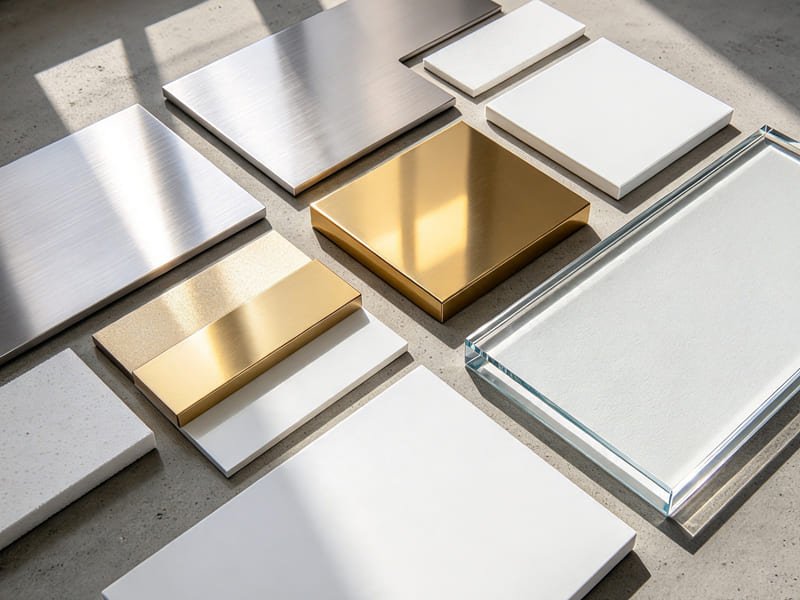
Every sign material brings distinct trade-offs between upfront purchase price, weight, aesthetic appeal, and maintenance effort. Understanding how aluminum stacks up against both traditional metals and modern polymers helps buyers choose the right substrate for their specific budget and setting.
Aluminum vs. Stainless Steel and Carbon Steel
Mild carbon steel is stiff, heavy, and inexpensive upfront. However, unless it receives an unblemished, industrial-grade powder coating, it will inevitably rust when exposed to moisture. Even then, mechanical vibration around fastener points often chips the paint, allowing moisture to reach the steel. Stainless steel contains chromium, which forms a passive protective barrier that resists rust. It is solid, heavy, and conveys modern industrial strength. However, stainless steel costs two to three times more than aluminum and weighs almost three times as much, requiring heavier mounting systems. Aluminum provides complete rust immunity at a far more accessible price point.
Aluminum vs. Cast Bronze and Brass Plaques
Cast bronze and solid brass are the historic gold standards for public memorials, donor recognition walls, and heritage markers. Over decades outdoors, bronze develops a classic greenish-brown patina that preservationists love. But bronze is exceptionally heavy, requires skilled foundry mold casting, and comes with a premium price tag. Cast aluminum plaques deliver identical raised dimensional lettering and background textures (like stipple or leatherette) at approximately 20 to 40 percent lower cost, while cutting wall load in half. If you want a sign that retains its exact factory color rather than aging into a dark patina, painted or anodized aluminum is the superior choice.
Aluminum vs. Exterior Plastics: Acrylic, PVC, and Coroplast
Plastics dominate entry-level signage, but they have major limitations when placed under harsh outdoor elements:
- Acrylic (Plexiglas): Delivers beautiful, glass-like depth and polished edges. It is a stunning choice for interior lobby branding and illuminated sign faces. Outdoors, however, years of intense ultraviolet radiation can gradually yellow standard acrylic, dull its high-gloss sheen, and cause fine stress cracks (crazing) around drilled mounting holes.
- Expanded PVC (Sintra): Lightweight, smooth, and easy to cut. It performs reliably indoors for years. Outdoors, dark-colored PVC absorbs solar heat, leading to severe warping and sagging within two to three summers.
- Corrugated Polypropylene (Coroplast): The classic ribbed plastic yard sign. Highly affordable for 90-day election campaigns, temporary parking, and event wayfinding, but flutes show through in raking light and direct sun breaks down the plastic in one to two years. Aluminum outlasts plastic alternatives by a decade, making its lifecycle cost significantly lower.
| Sign Material | Average Lifespan | Weight Category | Rust Resistance | Maintenance Level | Relative Cost |
|---|---|---|---|---|---|
| Sign Aluminum | 10 to 15+ Years | Lightweight | Complete (Zero Iron) | Very Low (Soap/Water) | Moderate ($$) |
| Dibond / ACM | 7 to 12+ Years | Very Lightweight | Complete (Zero Iron) | Very Low | Moderate ($$) |
| Stainless Steel | 20+ Years | Heavy | High (Resists Rust) | Low | High ($$$$) |
| Cast Bronze | 50+ Years | Very Heavy | Forms Natural Patina | Medium (Annual Wax) | Premium ($$$$$) |
| Cast Acrylic | 5 to 8 Years (Outdoor) | Moderate | Complete (Plastic) | Medium (Anti-Scratch) | Moderate to High ($$$) |
| Expanded PVC | 1 to 3 Years (Outdoor) | Lightweight | Complete (Plastic) | Low | Economical ($) |
Inside the Factory: Advanced Fabrication, Printing, and Finishing Techniques
Industrial aluminum sign fabrication combines high-precision cutting via computer numerical control (CNC) routers, fiber lasers, and waterjets with automated surface prep, direct flatbed UV-cured ink printing, and oven-cured electrostatic powder coating to create highly durable architectural signs.
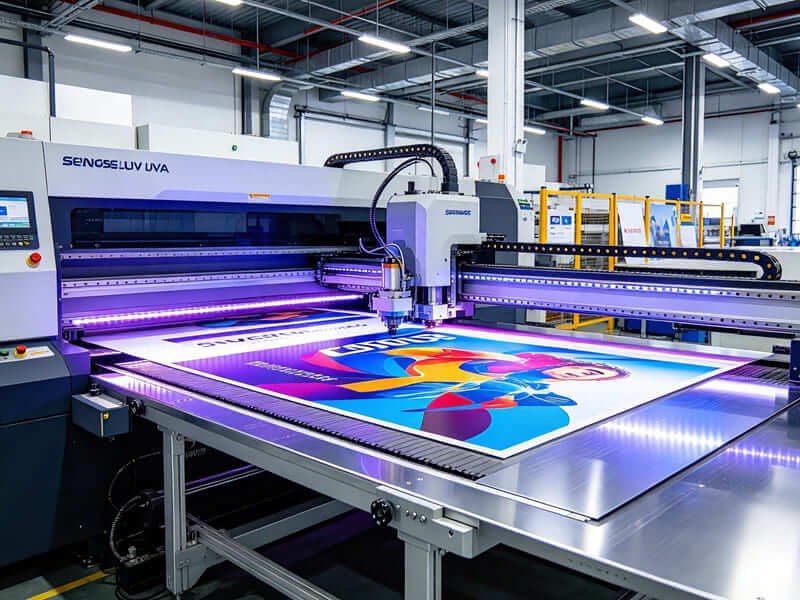
Transforming raw aluminum coils and sheets into finished architectural displays requires specialized industrial machinery. Each step in the factory workflow contributes directly to the sign’s edge quality, graphic adhesion, and resistance to environmental wear.
Precision Cutting: CNC Routers, Fiber Lasers, and Waterjets
Commercial sign production relies on three primary cutting technologies:
- CNC Routers: High-speed mechanical spinning bits guided by computer CAD files. Routers excel at cutting standard rectangular panels, contouring rounded safety corners, and cutting composite panels. Specialized V-groove router bits cut through the rear aluminum face and core of ACM without touching the front skin, allowing the material to fold into clean, seamless sign boxes.
- Fiber Laser Cutters: A highly concentrated, computer-guided light beam that melts metal along a hair-thin path using a high-pressure jet of assist gas (usually nitrogen or oxygen) to blow the molten slag away. Fiber lasers cut flat metal letters and stencil-cut signs with surgical precision. When creating stencil-cut panels, designers must add small structural connectors known as bridges to keep the centers of letters like A, B, O, and P from falling out during cutting.
- Abrasive Waterjets: A supersonic stream of water mixed with crushed garnet abrasive. Waterjets slice through solid aluminum plates up to two inches thick without generating heat, leaving a satin, burr-free edge with zero thermal distortion.
Edge Deburring and Progressive Abrasive Grain Finishing
Freshly cut metal always carries razor-sharp edges and micro-burrs along its bottom cut line. Quality sign fabrication requires thorough deburring. Technicians run manual scraping hooks or pneumatic rotary carbide tools along all perimeters to soften the edge into a safe, consistent radius. This protects installation crews and prevents paint from pulling away from sharp corners.
When producing brushed aluminum sign faces, the factory follows a strict 3-step orbital or linear sanding progression. The metal first receives an 80-grit pass to remove handling marks and establish surface flatness. Technicians then refine the tooth with 120-grit abrasives. Finally, they apply a 220-grit pass running in a single, straight direction to produce a uniform directional grain. If a mirror-polish face is requested, sanding continues up through 1,000-grit papers before final buffing on a wheel with specialized metal compounds.
Direct-to-Substrate Flatbed UV Printing vs. Cast Vinyl Lamination
Once the aluminum substrate is prepped and wiped with isopropyl alcohol to remove surface dust, graphics are applied using one of two primary methods:
- Flatbed UV Printing: The coated aluminum sheet is locked flat on a perforated vacuum table. Piezoelectric printheads sweep across the metal, depositing micro-droplets of UV-curable ink directly onto the pre-coated metal surface. Intense ultraviolet lamps travel alongside the printheads, instantly polymerizing the liquid ink into a solid, cross-linked plastic layer before it can bleed. UV inks do not dry by evaporation; they cure on contact, producing razor-sharp text up to 1,200 dots per inch. Because the ink is bonded directly to the coating, there are no vinyl edges that can lift or peel.
- Cast Vinyl Overlays: Premium cast vinyl film (such as 3M series films) is printed on roll-to-roll printers, protected with a clear laminate, and squeegeed onto the aluminum panel using cold-pressure rollers. This method is slower and adds a film layer, but it remains the industry standard when applying retroreflective highway sheeting or specialty metallic films.
It is worth noting that outdoor digital prints eventually fade over years in the sun. Ultraviolet light breaks down organic pigments in a predictable sequence: magenta and orange shift first, followed by yellow, while black and dark blues last longest. Adding a clear liquid clear coat or a protective fluoropolymer overlaminate shields the underlying pigments, extending bright graphic life by five to seven additional years. For details on laser cutting and architectural assembly, see our custom laser-cut metal signs guide.
Electrostatic Powder Coating: The Four-Step Armor Finish
For custom solid-color business logos, directional wayfinding posts, and heavy dimensional letters, electrostatic powder coating is the gold standard for exterior durability. Unlike liquid solvent paint that runs and chips, powder coating creates a thick, uniform protective shell:
- Chemical Pre-Treatment: The cut aluminum passes through multi-stage wash baths containing alkaline cleaners and chemical rinses to strip away all surface grease, milling oils, and microscopic oxides.
- Electrostatic Application: Dry, finely ground colored polymer resin powder is sprayed from an electrostatic spray gun. As the powder exits the nozzle, it receives a positive electrostatic charge. The aluminum sign panel is grounded to the earth, creating an invisible magnetic-like attraction that pulls the dry powder evenly across all edges, corners, and flat surfaces.
- Oven Curing: The coated sign travels into an industrial curing oven heated to approximately 375 to 400 degrees Fahrenheit (190 to 204 degrees Celsius). The powder particles melt, flow together, and cross-link into a continuous, tough polymer shell.
- Cooling and Inspection: Once cooled, the finish is completely cured, chemically inert, chip-resistant, and 100 percent free of harmful volatile organic compounds (VOCs). It can be matched to any Pantone or RAL color specification.
Layout Design, Visual Contrast, and Legal Compliance Standards
Effective sign engineering requires balancing visual hierarchy, color contrast, and viewing distance with mandatory building codes. Exterior signs must comply with local municipal zoning ordinances, roadway signage must follow MUTCD standards, and permanent interior room signs must fulfill federal ADA accessibility guidelines.
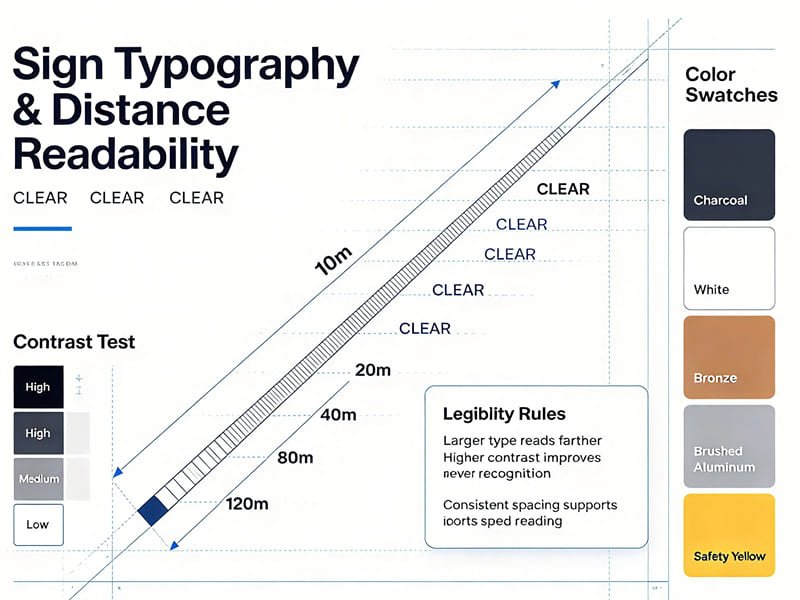
A beautifully fabricated sign fails its basic purpose if drivers cannot read it from the roadway or if building inspectors reject it for code violations. Sign design requires blending graphic aesthetics with physical viewing environments.
The Ten-Foot Viewing Rule and the 70% Contrast Formula
Legibility is governed by the human eye’s visual acuity at specific distances and speeds. The standard benchmark in commercial sign design is the Ten-Foot Rule: for every ten feet of intended viewing distance, your primary headline lettering must measure at least one full inch in height. If drivers are traveling past your building entrance at 45 miles per hour, your sign must be readable from at least 150 to 200 feet away, meaning your business name requires letters at least 15 to 20 inches tall.
Color contrast is equally vital. Research shows that sign legibility drops drastically if the brightness differential between text and background falls below 70 percent. Classic pairings like dark black lettering on a clean white background, deep navy on brushed silver, or bright white lettering on a dark bronze face maximize readability. Avoid low-contrast pairings like red lettering on brown backgrounds or pale yellow on bare metal. Stick with clean, confident sans-serif typefaces like Arial, Helvetica, or Futura for informational signage, as fine script typefaces tend to blur from a distance.
Factory Pre-Drilled Hole Standards and Corner Radii
Because aluminum signs are printed on automated flatbed machines and coated in curing ovens, all hole drilling and corner rounding must be planned into the digital blueprint before production starts. Drilling holes through a finished graphic on a job site risks scratching the paint, leaving sharp burrs, and placing fasteners straight through your logo text.
To ensure worker and pedestrian safety, factory sign blanks have their corners rounded using precision radius stamping dies. Standard corner radii include:
- 1.00 Inch Radius: Standard for 9-inch street blades, 12×12 inch square markers, and utility plates.
- 1.50 Inch Radius: The standard specification for 12×18, 18×24, and 24×36 inch commercial property and parking signs.
- 2.25 to 3.00 Inch Radius: Used for large 30×36, 36×48, and 48×48 inch highway panels and roadside billboards.
Mounting holes are typically pre-punched at 3/8-inch diameter. For wall-mounted panels, four holes are placed in the corners, set 1.5 inches in from each edge. For post-mounted signs, two holes are centered along the vertical midline, spaced to align with standard punched steel U-channel posts.
ADA Accessibility Rules and MUTCD Traffic Compliance
Signage regulations are strictly enforced by municipal and federal inspectors. Understanding which codes apply prevents expensive site replacements:
- Federal ADA Standards: Under the Americans with Disabilities Act, signs that designate permanent interior rooms and spaces (such as restrooms, stairwells, utility rooms, and room numbers) must feature non-glare matte finishes, high visual contrast, 1/32-inch raised tactile characters, and Grade 2 Braille. These signs must be installed 48 to 60 inches above the floor on the wall adjacent to the latch side of the door. Exterior building logo signs and temporary promotional panels are exempt from tactile Braille rules, giving you complete aesthetic freedom outdoors. Accessible guidelines can be verified directly at ADA.gov.
- MUTCD Roadway Standards: The Federal Highway Administration’s Manual on Uniform Traffic Control Devices (MUTCD) regulates all signs on public roads and private commercial parking facilities open to public travel. It mandates exact reflective sheeting tiers, specific symbol sizes, and strict .080 minimum sheet thickness to ensure driver safety and crashworthiness.
Professional Mounting Mechanics: Hardware and Wall Preparation
Proper installation protects an aluminum sign’s long-term performance. Secure mounting requires matching fasteners to the wall surface, utilizing stainless steel hardware with nylon washers to stop corrosion, and establishing adequate drainage gaps to keep trapped moisture from degrading the building facade.
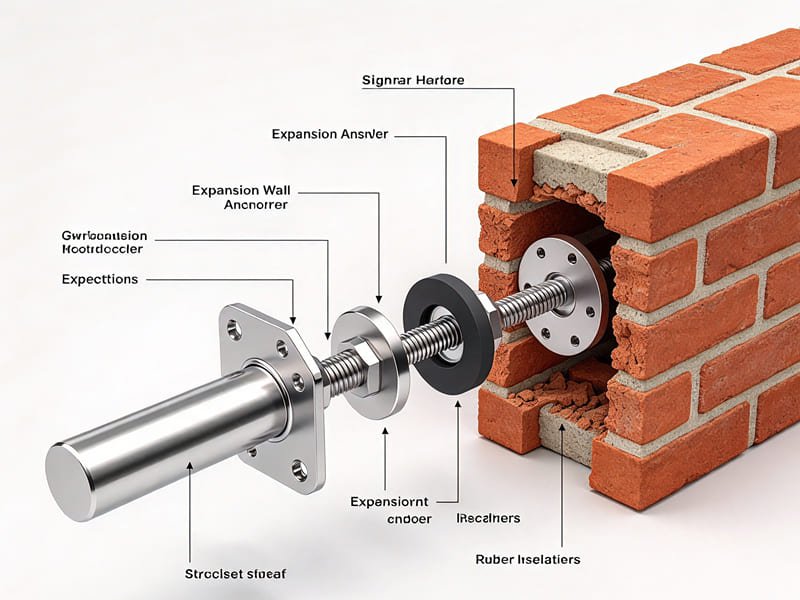
A sign is only as reliable as the mechanical connection securing it to the wall. Trapped rainwater, improper anchors, and over-torqued fasteners can easily compromise even the most durable custom metal sign.
Wall-Specific Anchoring: Drywall, Brick, Concrete, and Stucco
Different building surfaces require dedicated fastening strategies:
- Solid Masonry, Concrete, and Brick: Never drive simple wood screws into mortar joints. Use a hammer drill with a masonry bit to bore holes into solid brick faces, tap in plastic sleeve anchors or metal wedge expansion anchors, and drive heavy-duty stainless steel lag bolts. Under International Building Code (IBC Appendix H) guidelines, heavy exterior plaques must utilize anchors embedded at least five inches into solid masonry.
- Exterior Stucco: Stucco contains lime and aggressive mineral salts that corrode aluminum if left in direct contact. When mounting against stucco, installers must insert nylon or rubber spacers behind the sign to keep the metal at least 1/4 inch away from the wall surface.
- Commercial Siding and Wood: Drill pilot holes into wall studs or structural framing to prevent splitting, then secure with exterior-grade stainless steel wood screws.
- Interior Drywall: For lightweight signs, metal snap toggles or heavy-duty hollow-wall drywall anchors spread the load across the rear gypsum paper. Whenever possible, drive at least two screws directly into wood or steel vertical wall studs.
Standoff Hardware, Blind Studs, and French Cleats
The mounting system strongly influences the sign’s architectural presentation:
- Standoff Barrels: A favorite for corporate lobbies and sleek exterior entrances. Standoffs consist of a threaded base barrel secured to the wall anchor, a spacer body that holds the sign 0.5 to 1.0 inch off the wall, and a decorative cap that screws into the barrel from the front. This creates a refined, floating three-dimensional shadow line. Standoff mounting requires rigid .063 or .080 aluminum, as thin .040 metal will wave between the four mounting points.
- Concealed Blind Stud Mounts: Threaded metal studs are welded to the back of dimensional letters or cast plaques during manufacturing. Matching holes are drilled into the wall using an exact paper template, filled with structural two-part epoxy, and the studs are slid into the holes. The result is a seamless installation with zero visible screw heads.
- French Cleat Systems: An interlocking two-piece aluminum bracket cut at matching 45-degree angles. One cleat is anchored level to the wall; the interlocking cleat is riveted to the back of the sign panel. The sign drops onto the wall cleat, distributing weight across the full width while allowing easy removal for painting or maintenance.
The Role of Washers and Spacers in Preventing Surface Stress
When driving screws through aluminum, always place a soft nylon, neoprene, or rubber washer directly between the screw head and the painted sign face. Metal-on-metal contact tears through powder coatings and protective laminates during tightening. Over time, rain enters that tiny tear, leading to localized blistering.
Washers also cushion vibrational shocks from high winds and prevent overtightening from dimpling the sign face (dishing). Tighten fasteners until snug against the washer; never over-torque to the point where the metal visibly bows.
Maintenance Routines, Long-Term Lifespan, and Cost Variables
A professionally fabricated aluminum sign will easily last ten to twenty years outdoors with simple semi-annual cleaning. Pricing is dictated by square footage, metal gauge thickness, fabrication complexity, and finish selections, with standard flat panels ranging from $15 to $35 per square foot.
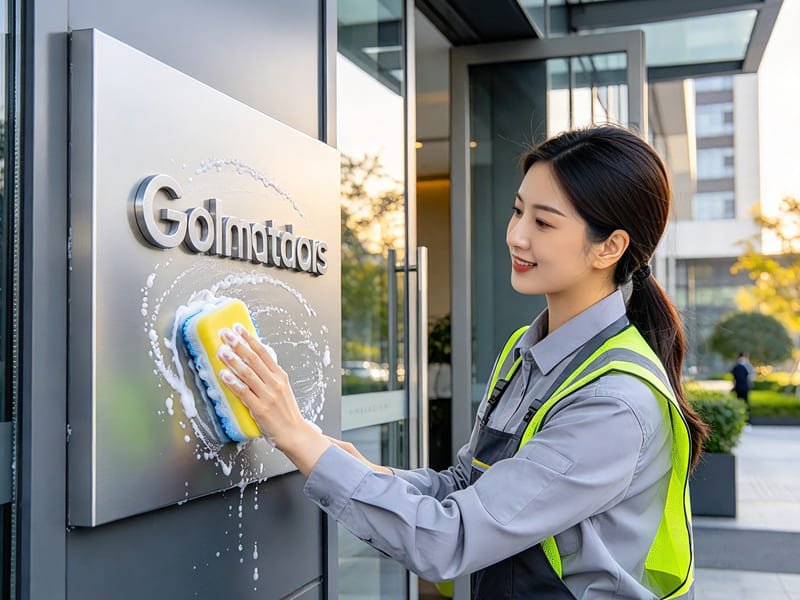
One of aluminum’s biggest selling points is its low lifecycle maintenance cost. Unlike wood that requires scraping and repainting every three seasons, aluminum signs remain pristine with minimal attention.
Gentle Cleaning Protocols and Seasonal Protection
Over time, airborne vehicle exhaust, industrial pollution, tree sap, and bird droppings accumulate on outdoor signs. If left to bake under intense summer sun, acidic pollutants can gradually etch protective clear coats. Establishing a regular, gentle cleaning routine preserves the factory finish:
- Step 1: Dry Dusting: Gently dust the sign surface with a soft, clean microfiber cloth or feather duster to remove loose dirt and grit before wetting.
- Step 2: Wash with Mild Solution: Mix a few tablespoons of mild, pH-neutral liquid dish soap into a bucket of lukewarm water. Dip a soft sponge or microfiber wash pad into the solution and gently wipe across the sign face. On brushed aluminum signs, always wipe in the direction of the metal grain to prevent micro-scratches.
- Step 3: Rinse Thoroughly: Rinse the sign completely with clean, low-pressure tap water to wash away all soap residue. Soap films left to dry will form chalky streaks.
- Step 4: Soft Towel Dry: Pat the surface dry using a clean lint-free towel to prevent mineral spots from hard water.
- Pro Tip: Protective Waxing: Every 6 to 12 months, apply a thin coat of automotive paste wax containing UV inhibitors to painted or powder-coated aluminum signs. Buff gently with a microfiber towel. The wax layer acts as a sacrificial barrier against sun fading, bug splatters, and road grime.
What to Avoid: Never clean aluminum signs with abrasive scouring pads, steel wool, acetone, petroleum solvents, or harsh bathroom cleansers. These chemicals will immediately dissolve clear coats and strip UV inks. Never use high-pressure pressure washers up close, as the concentrated water jet can lift the edges of graphics and break silicone perimeter seals.
Key Pricing Drivers in Custom Sign Fabrication
The manufacturing cost of custom metal signs is determined by five main factors:
- Total Material Volume and Gauge: Standard flat two-dimensional aluminum signs typically range from $15 to $35 per square foot for common sheet sizes. Stepping up from an economical .040 gauge to a heavy-duty .125 plate increases the raw aluminum content, which directly impacts the base substrate cost.
- Substrate Selection: Solid aluminum sheets provide maximum dent resistance at a modest price. Dibond composite panels offer exceptional rigidity on broad wall areas at competitive rates. Cast aluminum plaques require foundry molds, manual chasing, and hand-finishing, moving them into the premium architectural bracket alongside bronze.
- Cutting and Fabrication Complexity: Simple square and rectangular blanks cut on automated shear tables require minimal machine time. Conversely, complex multi-layer logos with intricate laser-cut outlines, custom-bent dimensional returns, or welded internal frames require significantly more machine programming and hand assembly.
- Protective Overlaminates and Specialty Finishes: Applying standard direct-to-substrate UV ink on white enamel is very cost-effective. Upgrading to custom-matched RAL powder coating, heavy-duty anti-graffiti overlaminates, or Diamond Grade prismatic retroreflective films adds specialized material steps.
- Illumination Integration: Adding reverse-welded metal returns, internal waterproof LED modules, low-voltage power supplies, and hidden rear standoffs to build a halo-lit architectural display increases overall fabrication costs. Most business owners invest between $2,000 and $7,500 for high-impact dimensional illuminated logo displays, as outlined in our custom business sign cost analysis.
| Maintenance Task | Recommended Frequency | Tools & Materials | Primary Purpose |
|---|---|---|---|
| Surface Wash | Every 3 to 6 Months | Mild soap, lukewarm water, microfiber cloth | Remove dust, exhaust soot, and acidic bird droppings |
| Hardware Inspection | Annually (Pre-Winter) | Hand screwdriver, torque wrench | Tighten loose bolts, verify anchor stability |
| Protective Waxing | Every 6 to 12 Months | Automotive carnauba paste wax, soft towel | Restore shine and create sacrificial barrier against UV rays |
| Drainage Check | Semi-Annually | Visual inspection, soft bristle brush | Ensure bottom weep holes and wall gaps remain clear |
| Scratch Touch-Up | As Needed | Color-matched acrylic enamel or clear coat pen | Seal coating breaches before atmospheric grime enters |
Frequently Asked Questions About Custom Aluminum Signs
Here are clear, direct answers to the eight most common questions buyers ask when engineering, purchasing, and installing commercial aluminum signage.
How long do custom aluminum signs last outdoors?
Solid aluminum metal sheets can easily last 20 to 30 years outdoors without rusting or structurally degrading. Printed graphics last between 5 and 10 years depending on sun exposure and whether a protective clear overlaminate is applied. Electrostatic powder-coated and anodized architectural finishes comfortably exceed 15 to 20 years in outdoor conditions.
Can custom aluminum signs be printed on both sides?
Yes. Solid pre-painted white aluminum and standard white composite panels are 100 percent opaque with zero light bleed. This makes them ideal for double-sided roadside real estate signs, parking lot posts, and overhead hanging blade signs. Brushed and reflective aluminum signs are typically produced single-sided.
What is the best thickness for an outdoor aluminum business sign?
For small wall-mounted signs up to 18×24 inches, .040 inch aluminum works well. For medium-sized signs or panels mounted to a single post, .063 inch is the commercial standard. For large roadside boards, high-wind zones, or official street signs, choose heavy-duty .080 or .125 inch aluminum to prevent bending.
Is Dibond better than solid aluminum for large exterior building signs?
Yes, for large flat wall displays, Dibond (ACM) is often better than solid aluminum. Its composite plastic core keeps the panel exceptionally flat, eliminating the wavy ripples (oil-canning) that can appear on large solid metal sheets. Solid aluminum remains the better choice for smaller signs exposed to heavy physical impacts.
Do aluminum signs rust in wet or coastal environments?
No, aluminum contains zero iron, so it is physically incapable of rusting. When exposed to rain or salt fog, it forms a microscopic protective aluminum oxide film that stops corrosion. Using marine-grade 5052 alloy combined with stainless steel fasteners guarantees complete protection against coastal weather.
What file format is required for laser-cut custom aluminum signs?
Industrial CNC routers and fiber laser cutting machines require true vector artwork files such as DXF, AI, EPS, or vector PDF. Raster formats like JPG and PNG cannot be used because laser cutters require mathematical vector outlines to guide the machine beam.
How do you install an aluminum sign on a brick or concrete wall?
Never screw directly into brick or mortar with wood screws. Drill clean holes into solid brick using a masonry drill bit, tap in heavy-duty plastic or metal expansion anchors, and fasten the sign using stainless steel lag bolts with rubber washers. Standoff barrels can also be used to float the sign away from uneven brickwork.
Do exterior aluminum business logo signs have to be ADA compliant with Braille?
No. Federal ADA regulations only require tactile raised lettering and Grade 2 Braille on interior signs that identify permanent rooms and spaces, such as restrooms, stairwells, and room numbers. Exterior building logos, entrance signs, and parking directional markers are legally exempt from Braille requirements.
Building Your Brand on a Strong Foundation
Your exterior sign is often the very first physical interaction a customer has with your business. It serves as your 24/7 silent salesperson, working through driving rain, winter freezes, and blistering summer heat to tell the world that your company is established, reliable, and committed to quality. Investing in a high-grade aluminum sign guarantees that your brand is presented with strength and precision, saving your property from the faded colors, warped panels, and rust streaks that plague lesser materials.
From choosing the right thickness to prevent wind ripples to selecting marine-grade 5052 alloys, every detail in aluminum sign manufacturing plays a vital role in long-term performance. At Custom Signages Factory, our engineering team operates cutting-edge industrial CNC routers, high-precision fiber lasers, and high-definition flatbed UV printing systems under one roof. We help business owners, architects, and facilities teams translate their vision into durable, beautifully crafted metal signs tailored to their exact mounting environments and architectural aesthetics.
Whether you need a series of branded property markers, custom-cut laser logos, or code-compliant architectural plaques, the right solution starts with an honest engineering conversation. Reach out to our technical team at Custom Signages Factory today for a personalized material consultation and a free digital mock-up, and let us build a sign that will represent your brand with pride for decades to come.