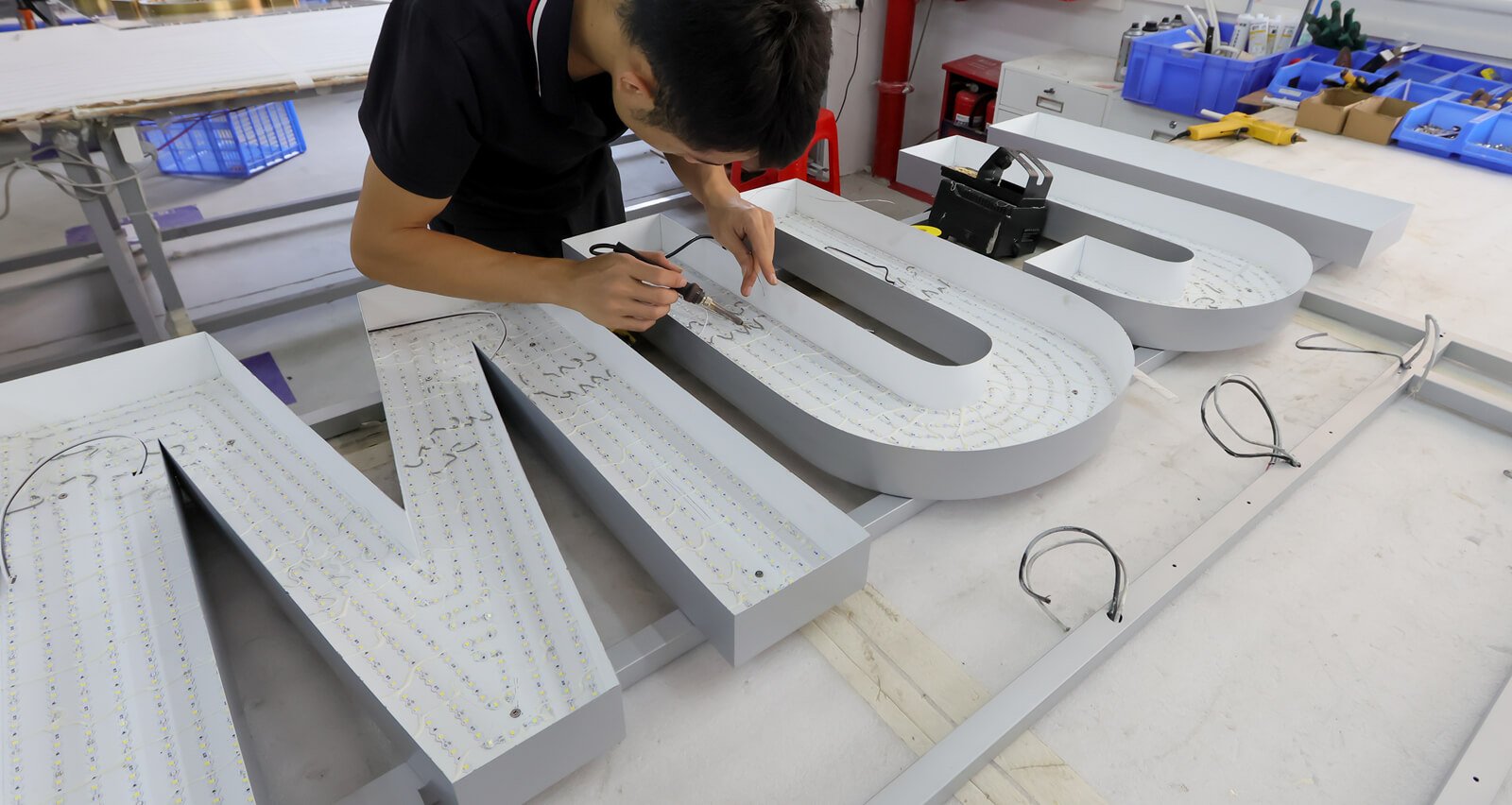
Did you know that roughly 76 percent of consumers have walked into a commercial establishment for the first time simply because an attractive sign caught their eye? Even more striking, research demonstrates that 68 percent of customers directly link the visual quality of a company’s signage to the quality of its products and services. In commercial environments, your signage functions as your silent salesperson. It speaks around the clock, telling every visitor, tenant, and client whether your enterprise is detail-oriented, established, and trustworthy. Yet, many project managers and property directors order metal signage without realizing that the word aluminum describes three entirely different visual canvases.
Imagine the disappointment of paying for an executive lobby sign expecting a high-end metallic look, only to receive a flat white board. Or imagine installing standard parking lot signs that completely disappear into darkness after sunset, leaving visitors confused and creating real traffic safety hazards. These costly mismatches happen when buyers do not understand the physical differences between standard white, brushed, and reflective aluminum. Each material handles daylight, artificial spotlighting, vehicle headlights, and digital printing inks in fundamentally different ways.
This comprehensive technical guide eliminates that guesswork. We break down the surface physics, pre-press printing rules, nighttime optical behaviors, and lifecycle costs of all three aluminum sign formats. You will learn why brushed metal requires specialized spot white ink channels, how retroreflective micro-prisms redirect vehicle headlights, and where pre-painted white enamel delivers unmatched color vibrancy. By the end of this guide, you will know exactly which aluminum finish aligns with your architectural environment, safety codes, and long-term branding goals.
Table of Contents
The Three Faces of Aluminum Signage: An Engineering Overview
Standard aluminum features a smooth, factory-baked white enamel finish ideal for vibrant full-color printing. Brushed aluminum displays an unpainted, directional satin grain that delivers a modern, high-end metallic look. Reflective aluminum incorporates an engineered micro-prismatic or glass-bead vinyl overlay that bounces light back to drivers for 24/7 visibility.
Aluminum is the most versatile substrate in the sign industry, accounting for approximately 70 percent of all custom metal projects. It will never rust, it weighs one-third as much as steel, and it survives decades of exposure to extreme weather. However, raw aluminum fresh from the rolling mill is rarely suitable for direct display. Mill-finish aluminum carries surface oil, light manufacturing scratches, and a slick natural oxide layer that causes digital inks to peel away within a single season. To turn raw metal into an architectural-grade communication tool, manufacturers transform the face using three distinct chemical, mechanical, and optical processes.
The Material Evolution: From Raw Metal to High-Tech Substrates
To produce standard signage, mills run raw aluminum coils through chemical immersion baths to clean the metal before applying an electrostatically charged polyester primer. The metal is then coated on both sides with white polyester enamel and baked at high temperatures. This creates a flexible, chip-resistant white skin that bonds permanently to the underlying metal.
To produce brushed metal, factories skip the white paint entirely. Instead, the bare aluminum passes under high-speed abrasive belts that scratch parallel microscopic grooves across the surface. This mechanical texturing gives the metal a directional satin grain that softens reflections and highlights natural metallic tones. Finally, to produce reflective signage, manufacturers take an alodized, conversion-coated aluminum panel and laminate an optically engineered vinyl film onto its face under motorized pressure rollers. Learn how different raw alloys influence fabrication in our foundational guide to custom aluminum signs and manufacturing.
Why Surface Preparation Dictates Everything
The physical structure of the metal face governs how light bounces into the human eye and how printing inks anchor to the surface. A smooth white coating produces diffuse white reflection, maximizing color contrast during the day. A brushed surface produces directional, semi-specular reflection, creating a shifting metallic glow as a viewer walks past. A retroreflective film uses microscopic optical optics to return incoming light directly to its source. Understanding these physical traits prevents costly specification mistakes.
| Feature / Specification | Standard White Aluminum | Brushed Aluminum | Reflective Aluminum |
|---|---|---|---|
| Surface Chemistry | Coil-coated baked polyester enamel | Mechanical directional abrasive grain | Micro-prismatic or glass bead optical film |
| Structural Substrate | Solid sheet (.040″ to .080″) or 2mm ACM | Solid sheet (.032″/.040″) or 3mm ACM | Solid sheet (.080″/.125″) or 3mm ACM |
| Daytime Appearance | Opaque, high-contrast, vivid colors | Satin silver metallic, industrial sheen | Clean off-white or silver-white daytime look |
| Nighttime Visibility | Requires dedicated external floodlights | Requires dedicated interior/exterior lighting | Illuminates brilliantly in vehicle headlights |
| Double-Sided Printing | Yes (Pre-painted white on both sides) | Rarely (Single-sided brushed front face) | Yes (On solid aluminum with dual films) |
| Relative Cost Tier | Economical Baseline ($) | Moderate to Premium ($$ – $$$) | High / Optical Grade ($$$) |
Standard White Aluminum: The High-Contrast Commercial Baseline
Standard aluminum signs are pre-painted on both sides with a durable, coil-coated white polyester enamel. This creates an opaque, neutral background where full-color UV inks display maximum contrast and color accuracy. It is the most affordable, versatile metal option for parking, real estate, and exterior business displays.
When most people think of a metal business sign, standard white aluminum is the image that comes to mind. It is the workhorse of the global signage industry. From small parking space markers to ten-foot real estate development boards, standard white aluminum delivers exceptional visual clarity at a very accessible cost.
Anatomy of Coil-Coated White Enamel Aluminum
The secret behind standard aluminum’s durability is coil coating. During manufacturing, giant coils of aluminum alloy are unrolled, chemically cleaned, conversion-coated to resist corrosion, and painted with liquid polyester enamel in a continuous, automated pass. The metal travels through long baking ovens where the paint cures into a tough, flexible shell. This coil-coated finish will not crack or flake when the metal is sheared, punched, or stamped into rounded corners.
In the sign shop, standard aluminum arrives pre-finished with this white enamel on both the front and back faces. The unprinted white surface has a pleasant semi-gloss sheen. However, when digital UV inks land on the panel and cure under ultraviolet lamps, the ink cures into a refined matte texture. This contrast between the semi-gloss white background and matte printed lettering adds subtle visual depth to the finished graphic.
Color Vibrancy and Full CMYK Color Gamut Reproduction
In commercial printing, white is not merely a color; it is the foundation of optical contrast. Digital wide-format flatbed printers use cyan, magenta, yellow, and black (CMYK) inks. Because process inks are naturally translucent, they rely on light passing through the ink and bouncing off a bright white background underneath. When you print over standard white enamel, the white base reflects 100 percent of ambient light, producing vibrant reds, deep blues, and accurate corporate brand colors.
Furthermore, standard white aluminum makes graphic design straightforward. Any element in your digital artwork that is white (such as white headline text, white stars, or white logo shapes) does not require actual white ink. The printer simply leaves those areas unprinted, allowing the factory-baked white enamel of the metal panel to serve as the white portion of your design. This speeds up production and lowers printing costs.
True Double-Sided Functionality with Zero Light Bleed
Because standard aluminum arrives from the mill painted white on both sides, it is the premier choice for double-sided signage. Whether you choose a solid .063-inch aluminum sheet or a 2mm composite panel (e-panel), the metal is 100 percent opaque. Unlike thin plastic signs that allow sunlight to shine through, solid aluminum completely blocks light transmission. There is zero shadow bleed-through from the graphic on the front to the graphic on the back.
This makes standard white aluminum the optimal substrate for freestanding real estate posts, sidewalk A-frames, hanging outdoor blade signs, and perpendicular street banners where pedestrians approach from both directions. To understand how panel stiffness prevents bending in double-sided applications, review our guide to aluminum sign gauges and thickness standards.
Best Real-World Use Cases for Standard White Aluminum
Standard white aluminum excels wherever daytime legibility, high contrast, and budget efficiency are paramount:
- Commercial Property Management: Assigned tenant parking signs, visitor parking spaces, fire lane warnings, and tow-away notices.
- Facility Navigation: Loading dock directional arrows, shipping and receiving entrance signs, and building directory maps.
- Commercial Real Estate: High-impact four by eight foot listing boards advertising leasing opportunities, retail store openings, and commercial lots.
- Industrial Safety: OSHA-mandated caution, warning, and chemical hazard notices placed on factory walls and security perimeters.
Brushed Aluminum: Architectural Elegance and the Industrial Sheen
Brushed aluminum signs skip white paint entirely, featuring raw aluminum polished with a fine directional grain. This delivers a sophisticated, non-reflective metallic sheen that catches ambient light. It is primarily specified for upscale corporate lobbies, law firms, and modern interior directories where premium aesthetics take priority over raw contrast.
If standard white aluminum is the rugged everyday workhorse, brushed aluminum is the sophisticated corporate executive. When a company wants to convey prestige, architectural permanence, and technological precision, white paint often feels too industrial or utilitarian. Brushed aluminum provides an authentic metallic finish that immediately elevates an interior space.
The Mechanical Brushing Process: Grain, Texture, and Light Diffusion
Brushed aluminum does not rely on faux printed patterns. Its distinctive look comes from real mechanical craftsmanship. During fabrication, bare sheets of aluminum pass beneath abrasive wheel belts. These belts create thousands of parallel, microscopic hairline scratches across the metal surface, establishing a uniform, directional grain.
This textured grain changes how light behaves. Mirror-polished metals create intense, blinding hot spots when struck by ceiling spotlights. Brushed metal diffuses light along its directional lines, producing a soft, glowing satin sheen. The sign remains easy to read from wide angles without throwing harsh glare back into visitors’ eyes. Furthermore, the textured satin surface is naturally resistant to fingerprints, making it far more practical for high-traffic office corridors than mirror-finish metals.
Substrate Options: Solid Sheet (.032″ to .040″) vs. 3mm Composite (Dibond)
Brushed aluminum signage is produced in two distinct physical builds:
- Solid Brushed Sheet Metal (.032 to .040 Inch): Thin, lightweight solid sheets. They are easy to shear and work well for small desk nameplates, interior door sliders, framed wall plaques, and laser-engraved equipment tags. However, because thin solid metal bends easily, large sheets cannot be mounted unsupported.
- 3mm Brushed Composite Material (ACM / Dibond): The gold standard for modern architectural wall signage. A 3mm panel features a brushed aluminum front face bonded to a solid black polyethylene plastic core, backed by an unbrushed aluminum rear sheet. The composite core provides exceptional rigidity, keeping large lobby logo panels perfectly flat when mounted on dimensional standoff hardware. Compare solid sheet and composite performance in our technical guide on solid aluminum vs. Dibond ACM signs.
The Single-Sided Reality: Understanding Rear Mill Finishes
Project managers specifying brushed aluminum must keep one critical detail in mind: brushed panels are almost always single-sided. Unlike standard aluminum, which comes painted white on both sides, brushed composite panels are manufactured with a decorative brushed face on the front only. The back face carries a raw, unbrushed mill finish with visible roller marks and mill branding.
This is not a defect; it is how architectural composite panels are engineered. The rear face is designed to sit flat against a drywall surface or feature wall where it will never be seen. If your project demands a hanging, double-sided brushed sign (such as a projecting retail blade sign in an indoor shopping arcade), the sign shop must fabricate a custom sign tray by laminating two brushed sheets back-to-back or folding a grooved panel into an enclosed box.
Upscale Environments: Lobbies, Executive Suites, and Law Firms
Brushed aluminum signs are designed to impress up close. In corporate environments where clients stand just a few feet away, the rich metallic grain communicates stability, precision, and success. Common applications include:
- Corporate Reception Feature Walls: Company logos and wordmarks mounted directly over reception desks on brushed silver panels.
- Executive Suite & Boardroom Plaques: Door nameplates, conference room identifiers, and department directories in law firms, financial institutions, and medical centers.
- Architectural Wayfinding: Elevators, floor directories, and donor recognition plaques in luxury hotels, residential high-rises, and universities.
The Critical White Ink Printing Rule: Standard vs. Brushed Metal
Because standard digital sign inks are translucent, printing directly over brushed aluminum without white ink causes colored graphics to take on a metallic sheen, while white design elements turn into raw silver metal. To keep logos crisp, factories use spot white ink under specific details, avoiding full white floods that erase the brushed texture.
The single biggest technical hurdle buyers encounter when ordering custom metal signage is understanding how white ink behaves. If you send the exact same graphic file to print on white aluminum and brushed aluminum, the two finished signs will look entirely different. Failing to plan for ink translucency is the number one reason custom brushed metal orders disappoint unsuspecting buyers.
How Translucent CMYK Inks Interact with White vs. Metallic Surfaces
To understand what happens, look at ink chemistry. Wide-format digital flatbed printers use process color inks: Cyan, Magenta, Yellow, and Black (CMYK). These inks are not thick, opaque liquid paints. They are semi-translucent dyes suspended in ultraviolet-curable acrylic resin. They are designed to let light pass through them, hit the background beneath, and bounce back through the ink into your eye.
When translucent CMYK ink is printed onto standard white aluminum, the white enamel acts as an optical mirror, bouncing clean white light back through the colors. The colors look bright, punchy, and true to your digital screen. But when that exact same ink lands on bare brushed silver metal, there is no white background to bounce light. The silver metallic grain shows straight through the ink. A bright yellow turns into an amber gold; an emerald green turns into an iridescent metallic teal. Colors appear darker, richer, and distinctly metallic. This iridescent look can be visually striking for artistic branding, but it can ruin corporate logos that demand strict Pantone color calibration.
Spot White vs. Flood White: Preserving the Metallic Aesthetic
Even more critical is what happens to the white elements in your artwork. On a standard sign, the printer simply does not drop ink where white is shown, allowing the white metal sheet to show through. But on a brushed aluminum sign, there is no white base! If your company logo features white lettering and you print on brushed metal without white ink, your white lettering will simply be bare brushed silver metal. From ten feet away, silver lettering against a silver background is completely unreadable.
To solve this, advanced sign factories utilize multi-channel flatbed printers equipped with dedicated opaque white ink. How that white ink is applied makes all the difference:
- The Flood White Mistake: If an inexperienced operator sets the printer to lay down a solid flood coat of white ink across the entire sheet before printing your colors, the white ink acts like primer. The colors will look vibrant, but the white ink completely hides the brushed silver surface! You end up paying a premium price for brushed metal, only to bury it beneath white ink.
- The Spot White Solution: Experienced sign technicians program the printer using a dedicated spot white channel. The printer deposits an opaque layer of dense white ink only directly underneath your colored logo and text, leaving the background untouched. This gives you crisp, opaque, perfectly calibrated logo colors while allowing the raw brushed silver grain to shine through every square inch of negative space.
Preparing Vector Artwork for Brushed Metal: Pre-Press Best Practices
To achieve this professional look, graphic designers must prepare artwork correctly before submitting files to the factory. In professional vector software like Adobe Illustrator, the design file should contain a separate layer containing only the elements requiring white backing, assigned a 100 percent spot color typically named SpotWhite.
Pre-press technicians apply an engineering adjustment called a choke. The spot white underbase is shrunk inward by 0.5 to 1.0 point relative to the colored top layer. This microscopic choke guarantees that as the printer lays down the CMYK inks, the white base never peeks out along the outer edges of fine text. To see how vector file prep applies to precision cutting, consult our custom laser cut metal sign design guide.
| Printing Method | Substrate Base | White Ink Setting | Appearance of White in Design | Color Ink Appearance | Overall Visual Impact |
|---|---|---|---|---|---|
| Standard Direct UV | Coil-Coated White | None Required | Bright opaque white (uses metal base) | Vibrant, calibrated, maximum pop | Clean, high-contrast, utility-focused |
| Brushed (No White Ink) | Natural Brushed Silver | Disabled | Appears as raw silver brushed metal | Darkened, metallic, iridescent tones | Artistic, subtle, low text contrast |
| Brushed (Spot White Ink) | Natural Brushed Silver | Spot Underbase Only | Solid opaque white over metallic base | Vibrant, accurate logo color fidelity | Architectural, premium executive look |
| Reflective Screen / Vinyl | Optical Sheeting Film | Not Used (Transparent Inks) | Reflective white / silver-white base | Standard daylight; intensely bright night | High-visibility safety & traffic control |
Reflective Aluminum: Nighttime Optics and Highway-Grade Sheeting
Reflective aluminum signs appear as standard signs during the day but reflect intense light directly back toward vehicle headlights at night. Built by laminating micro-prismatic optical sheeting over an aluminum panel, they are required for traffic safety, road intersections, and unlit parking areas.
When darkness falls, standard white aluminum and brushed silver metal lose nearly all visibility. Unless an outdoor sign is illuminated by expensive external floodlights, human eyes cannot read it past twenty feet in the dark. Reflective aluminum solves this problem without requiring electrical wiring, solar panels, or lightbulbs. It turns approaching vehicle headlights into its own power source.
The Science of Retroreflection: Glass Beads vs. Micro-Prisms
To understand reflective signs, you must understand retroreflection. When light strikes a regular wall, it scatters in every direction (diffuse reflection). When light hits a mirror, it bounces off at the exact opposite angle (specular reflection). Retroreflection is completely different. Retroreflective surfaces bounce incoming light rays straight back along the path they arrived, sending light directly into the eyes of the driver sitting behind the vehicle headlights.
Reflective signage technology has evolved across two mechanical generations:
- Enclosed Glass Bead Technology: The original reflective method, first developed in the mid-20th century. Millions of microscopic, perfectly round glass spheres are embedded inside a transparent polymer resin layer. Light enters the sphere, refracts inward, bounces off a mirror-coated back wall, and exits back toward the light source. Glass bead films provide reliable wide-angle performance but return only about 15 to 20 percent of incoming light.
- Full-Cube Micro-Prismatic Technology: The modern optical standard developed by manufacturers like 3M Commercial Solutions. Rather than glass beads, the vinyl layer contains microscopic geometric prisms molded into three-sided internal cubes. Light enters the prism face, bounces off the three internal walls, and exits at high intensity, returning up to 60 percent of light to the driver. Micro-prisms produce signs that appear almost twice as bright from long viewing distances.
Understanding ASTM Reflective Tiers: Engineer Grade, HIP, and Diamond Grade
In the United States and internationally, reflective sheeting performance is classified under strict engineering standards set by ASTM International standard D4956. Sign buyers choose from three primary commercial tiers:
- Engineer Grade (ASTM Type I): Utilizing enclosed glass bead technology, Engineer Grade (such as Avery T1500) represents the entry-level reflective film. It provides reliable reflectivity for slow-speed environments and carries a 5 to 7 year outdoor lifespan. It is ideal for commercial parking spots, private residential driveways, golf cart paths, and building number plaques.
- High-Intensity Prismatic / HIP (ASTM Type III/IV): Utilizing full-cube micro-prismatic cells, HIP sheeting (such as 3M series 3930) is roughly three times brighter than engineer grade and carries a 10-year outdoor warranty. The Federal Highway Administration MUTCD legally mandates HIP sheeting as the minimum standard for public municipal traffic control, including stop signs, speed limit signs, and city street blades.
- Diamond Grade / DG3 (ASTM Type XI): The pinnacle of retroreflective optics. Diamond Grade sheeting (such as 3M series 4090) returns up to 60 percent of available light. It is engineered specifically for modern computerized LED headlights, which cast light lower than older halogen bulbs. DG3 is mandated for critical interstate overhead guide signs, complex highway interchanges, pedestrian crosswalks, and school zones. Learn more about roadway rules in our MUTCD traffic sign thickness and reflective standards guide.
Matching Inks and Specialty Protective Laminates
You cannot fabricate a reflective sign by simply printing opaque UV ink over reflective film. Dense, opaque inks block light from reaching the micro-prisms beneath, turning those printed areas completely dark at night. To keep colors bright in the dark, sign shops use specialized transparent screen-printing inks or transparent digital roll-to-roll inks that allow headlight beams to pass through the color layer, bounce off the prisms, and return to the driver.
Furthermore, because retroreflective vinyl consists of multiple microscopic optical layers, the face must be shielded from moisture intrusion and ultraviolet breakdown. High-quality reflective signs receive a high-performance cast clear fluoropolymer overlaminate, such as 3M 1170 film. This overlaminate protects the reflective prisms against acid rain, road salt spray, and yellowing, guaranteeing clear visibility for a decade or more.
Crucial Nighttime Applications: Roadways, Security, and 24-Hour Facilities
Reflective aluminum is an essential investment for any facility operating after sunset:
- Commercial Real Estate & Parking Facilities: Speed limit signs, one-way directional arrows, pedestrian crosswalk alerts, and overhead clearance warnings.
- Emergency Infrastructure: Hospital emergency room entrance arrows, ambulance bay markers, fire hydrants, and evacuation assembly points.
- Industrial Logistics: Warehouse loading dock numbers, truck freight route arrows, and chemical storage warning gates.
- Property Security: 24-hour video surveillance warnings, private property boundaries, and security gate call-box signs.
| Reflective Grade | ASTM Standard | Optical Technology | Outdoor Lifespan | Headlight Return Efficiency | Primary Recommended Application |
|---|---|---|---|---|---|
| Engineer Grade (EG) | ASTM Type I | Enclosed Glass Spheres | 5 to 7 Years | ~15% to 20% | Commercial parking spots, property notices |
| High-Intensity Prismatic | ASTM Type III / IV | Full-Cube Micro-Prisms | 10 Years | ~35% to 45% | Municipal street names, speed limits, stop signs |
| Diamond Grade (DG3) | ASTM Type XI | Full-Cube Optical Optics | 10 to 12+ Years | ~55% to 60% | Interstate overheads, school zones, crosswalks |
Visibility and Human Optical Perception: Daytime, Ambient, and Headlight Illumination
Sign visibility depends on environmental lighting conditions. Standard white aluminum excels under full daylight with maximum contrast. Brushed aluminum thrives under soft indoor ambient light without harsh glare. Reflective aluminum is engineered specifically for dark settings where external light sources like headlights activate its retroreflective layers.
A sign can be manufactured from the finest aluminum alloys in the world, but if human eyes cannot quickly process its message, it fails its primary purpose. Human visual perception changes dramatically depending on whether a sign is viewed in broad daylight, under indoor office fluorescent fixtures, or along a pitch-black access road.
The 70% Contrast Rule Across Different Metal Surfaces
Visual legibility is governed by luminance contrast, which is the difference in light reflectance between the background surface and the text lettering. Optometrists and human factors engineers widely agree on the 70 percent contrast formula: to ensure that moving drivers or busy pedestrians can read a sign in a fraction of a second, the brightness differential between text and background must exceed 70 percent.
Standard white aluminum achieves this effortlessly. Dark black, deep red, or navy lettering placed on a crisp white enamel background yields a contrast differential well above 80 percent, maximizing daytime legibility. Achieving 70 percent contrast on brushed aluminum requires careful color selection. Because brushed silver has a mid-tone metallic gray reflectance, light pastel colors, yellows, and medium grays blend into the metal, making text difficult to read. On brushed metal, designers must stick with bold, dark colors (black, charcoal, navy) or utilize opaque spot white ink to create crisp contrast borders.
Managing Glare: Sunlight, Office Downlights, and Raking Angles
Lighting angles present major architectural challenges. Mirror-polished stainless steel or glossy brass signs look dramatic in catalogs, but when installed directly beneath recessed ceiling downlights in an office lobby, they create blinding hot spots. Anyone standing directly in the reflection path sees only glare, making the company name unreadable.
Brushed aluminum acts as a built-in optical diffuser. Its microscopic scratch lines scatter overhead light sideways along the grain, softening hot spots and ensuring the sign remains readable from every angle in the room. Outdoors, sunlight hitting high-gloss street signs can produce similar glare issues. Sign makers solve this by pairing standard white aluminum with matte-finish UV inks or applying matte clear overlaminates that eliminate sunlight reflection.
Viewing Distance and Human Perception in Low-Light Conditions
The standard baseline in commercial signage design is the Ten-Foot Rule: for every ten feet of required viewing distance, primary headline lettering must measure at least one full inch in height. In daylight, a sign with four-inch letters is easily read from 40 feet away on both white and brushed aluminum.
However, at night, the human eye loses its color-sensing cone cells and relies on motion- and light-sensing rod cells. Color perception fades, and unlit signs blend into the dark background. An unlit standard white sign that was readable from 40 feet at noon becomes completely invisible past 15 feet at midnight. A reflective sign reverses this degradation. The moment car headlights sweep across the panel, the retroreflective micro-prisms redirect light directly into the driver’s eyes, illuminating the lettering with high-contrast brightness from over 200 feet away.
Durability, Weather Resistance, and Maintenance Cycles
All three aluminum sign types are 100 percent rust-proof because aluminum contains no iron. Standard baked enamel lasts 7 to 10+ years outdoors. Brushed aluminum lasts over a decade indoors but requires UV-protective clear coats outside. Reflective signs withstand severe storms for 7 to 10+ years depending on sheeting grade.
Commercial signs are constantly exposed to the elements. From blazing summer ultraviolet rays to freezing sleet, industrial soot, and coastal salt fog, environmental forces constantly work to break down outdoor materials. Fortunately, aluminum’s metallurgical properties deliver exceptional natural resilience. According to technical standards maintained by the Aluminum Association, aluminum forms a self-healing barrier that shields the underlying metal from corrosive atmospheric attacks.
Exterior Longevity: Rain, Ultraviolet Degradation, and Salt Fog
Because aluminum contains zero iron, it physically cannot rust. If a flying pebble scratches an aluminum sign, the bare metal simply oxidizes into a quiet, protective dull-gray layer. It will not flake away or streak rust down building walls like painted steel.
When an aluminum sign eventually reaches the end of its lifespan, it is almost never because the metal failed; it is because the printed graphics or vinyl layers degraded under direct sunlight. Ultraviolet light breaks down organic pigments over time. Magenta and orange pigments fade first, followed by yellow, while black and deep blue inks last the longest. Pre-painted white enamel aluminum features inorganic titanium dioxide pigments that withstand intense sun for 7 to 10 years without chalking. Reflective vinyl sheeting protected with UV overlaminates comfortably delivers 10 or more years of exterior service. Brushed aluminum installed in indoor lobbies lasts practically indefinitely, easily exceeding 15 to 20 years with zero deterioration.
Cleaning Protocols: Caring for Painted, Brushed, and Reflective Faces
Over months of outdoor exposure, vehicle exhaust soot, pollen, tree sap, and bird droppings settle onto sign faces. Left unchecked, acidic contaminants can etch protective clear coats. Establishing a regular, gentle cleaning routine preserves the factory finish:
- Step 1: Loose Dirt Removal: Lightly dust the sign surface with a clean, dry microfiber cloth or soft feather duster to remove loose sand and grit that could scratch the finish during washing.
- Step 2: Gentle Washing: Mix a few tablespoons of mild, pH-neutral liquid dish soap into a bucket of clean lukewarm water. Using a soft microfiber wash mitt or non-abrasive sponge, gently wipe across the sign face. On brushed aluminum signs, always wipe parallel to the direction of the grain to prevent micro-scratches.
- Step 3: Thorough Rinse: Rinse the sign completely with clean, low-pressure water. Never let soapy residue dry on the panel, as dried soap leaves chalky mineral streaks.
- Step 4: Soft Towel Dry: Pat the surface dry with a clean, lint-free microfiber towel to eliminate hard water spots.
What Never to Do: Protecting Delicate Surfaces from Abrasives and Harsh Solvents
Many durable signs are ruined by well-intentioned maintenance workers using the wrong cleaning tools. Avoid these common mistakes:
- Never Use Abrasives: Steel wool, Scotch-Brite scouring pads, wire brushes, and abrasive pumice cleansers will instantly destroy painted finishes, haze clear coats, and scratch brushed metal.
- Never Use Harsh Solvents: Acetone, lacquer thinner, paint strippers, and aggressive citrus degreasers will dissolve UV-curable inks and destroy the optical layers inside reflective vinyl.
- Avoid Close-Range Pressure Washing: Never spray reflective sheeting or printed panels with a high-pressure power washer at close range (keep nozzles at least three feet away). High-pressure water jets can force water underneath vinyl edges, causing the film to lift.
- Annual Protection Tip: Apply a light coat of high-grade automotive carnauba paste wax containing UV blockers to painted or powder-coated aluminum signs once every six months. The wax seals microscopic pores, shields the ink from solar UV rays, and makes road soot wash away effortlessly during rainstorms.
| Aluminum Sign Type | Outdoor Lifespan | Indoor Lifespan | Cleaning Frequency | Safe Cleaning Agents | Prohibited Cleaners |
|---|---|---|---|---|---|
| Standard Baked White | 7 to 10+ Years | 15+ Years | Every 3 to 6 Months | Mild dish soap, lukewarm water, carnauba wax | Abrasive scouring pads, acetone |
| Brushed (Uncoated) | 3 to 5 Years (Shaded) | 15+ Years | Every 6 Months | Mild soap (wipe with grain), microfiber cloth | Cross-grain scrubbing, ammonia |
| Brushed (Clear Coated) | 7 to 10 Years | 20+ Years | Every 6 Months | Mild soap, soft cloth, synthetic sealant | Wire brushes, petroleum solvents |
| Reflective (Engineer) | 5 to 7 Years | 10+ Years | Every 3 to 6 Months | Lukewarm soapy water, low-pressure rinse | Close-range power washers, degreasers |
| Reflective (High-Intensity) | 10 Years (MUTCD) | 15+ Years | Semi-Annually | pH-neutral soap, soft sponge, 3M cleaners | Steel wool, harsh chemical strippers |
Cost Breakdown, Manufacturing Complexity, and Value Engineering
Standard white aluminum is the most budget-friendly option due to mass-produced pre-painted coil stock. Brushed aluminum costs 15 to 30 percent more because of specialized metal polishing and spot-white printing. Reflective aluminum carries the highest material cost due to precision optical vinyl films and overlaminates.
When budgeting for a commercial sign project, understanding what drives the price tag helps property directors allocate capital effectively. Sign pricing is determined by raw material costs, machine production hours, and specialized labor steps. For a complete guide to commercial signage pricing structures, explore our breakdown of custom business sign costs.
Upfront Material Expenses: Raw Metal, Coil Coatings, and Sheeting Overlays
Standard white aluminum represents the most economical price per square foot. Rolling mills produce millions of square feet of white coil-coated aluminum sheets every month. Because of this massive production volume, sign shops purchase white aluminum sheet stock at highly competitive wholesale rates. In standard sizes (like 12×18 or 18×24 inches), a flat white aluminum sign provides the best durability-to-dollar ratio of any material in the industry.
Brushed aluminum costs slightly more. Creating a uniform brushed texture requires specialized rolling belts, protective peel-off shipping films, and higher-grade composite panel substrates. Material stock for brushed composite panels typically runs 15 to 25 percent higher than standard white panels.
Reflective aluminum carries the highest raw material expense. The retroreflective sheeting laminated onto the aluminum is an engineered optical product. Manufacturing millions of microscopic prisms and micro-beads requires specialized cleanroom facilities and proprietary optical resins. High-Intensity Prismatic (HIP) sheeting can easily double or triple the base substrate material cost compared to standard white enamel.
Flatbed Printing vs. Roll-Lamination Labor Costs
Manufacturing labor also influences the final invoice:
- Standard Aluminum Labor: The pre-painted white panel is loaded directly onto a flatbed UV printing table. The operator presses print, the machine deposits ink in a single pass, and the sign comes off the bed dry and ready for hole punching. Labor is fast and automated.
- Brushed Aluminum Labor: Printing brushed metal requires advanced pre-press setup. The technician must calibrate a secondary spot white ink channel, align the vector choke, and run the printer in dual-head mode (depositing white ink and colored inks in coordinated passes). This dual-pass setup requires more machine time and specialized operator attention.
- Reflective Aluminum Labor: Fabricating reflective signs requires multi-step manual handling. The reflective film must be printed on roll-to-roll equipment, laminated with a clear UV protective film through motorized pressure rollers, and laminated onto the conversion-coated aluminum blank before final trimming and corner rounding.
Total Cost of Ownership (TCO) Over a Ten-Year Horizon
Smart property managers evaluate signs through the lens of Total Cost of Ownership. While reflective signage costs more upfront, consider the liability savings: installing a high-intensity reflective stop sign in an unlit commercial parking lot prevents costly vehicular collisions and personal injury claims. In corporate lobbies, investing in brushed aluminum delivers architectural prestige that builds immediate client trust, paying for itself thousands of times over in executive credibility.
Application Decision Guide: Which Aluminum Sign Do You Need?
Choose standard white aluminum for everyday commercial parking, real estate, and general business signs. Choose brushed aluminum for corporate lobbies, executive boardrooms, and upscale architectural directories. Choose reflective aluminum for private roads, traffic intersections, security perimeters, and any sign read by vehicle headlights.
To help you quickly finalize your material specifications, we have matched the most common commercial signage scenarios to their ideal aluminum finish, recommended substrate thickness, and primary engineering justification.
Commercial Property Management and Parking Lots
For tenant reserved parking spaces, visitor directions, and building numbers mounted along outdoor fences or masonry walls, choose standard white aluminum (.063 gauge). It provides maximum daytime contrast, resists wind bending, and keeps procurement costs low across multi-tenant properties.
For stop signs, one-way exit arrows, and speed bumps on commercial properties open to vehicular traffic, specify reflective aluminum (.080 gauge) with High-Intensity Prismatic sheeting. This guarantees compliance with road safety standards and ensures drivers see critical warnings from their headlights.
Corporate Offices, Hospitality, and Medical Interiors
For reception feature walls, boardroom identifiers, and executive doorplates, specify brushed aluminum composite (3mm) mounted with stainless steel standoff hardware. The satin metallic texture diffuses office ceiling lights, hides fingerprints, and establishes an upscale corporate identity. When planning interior room identification signs (like restrooms and utility rooms), ensure your finishes comply with non-glare rules under the Americans with Disabilities Act (ADA).
Municipal, Industrial Safety, and 24/7 Security Zones
For remote facility gates, electrical substations, and industrial warehouse perimeters, specify reflective aluminum. In low-light environments, perimeter security signs (such as 24-Hour Video Surveillance or High Voltage Warnings) illuminate brilliantly in patrol car spotlights, deterring trespassers long before they reach the fence line.
| Commercial Installation Scenario | Recommended Finish | Recommended Thickness | Lighting Environment | Primary Engineering Justification |
|---|---|---|---|---|
| Corporate Reception Logo | Brushed Silver (Spot White) | 3 mm Composite (ACM) | Ambient indoor spotlights | Diffuses ceiling glare; provides executive prestige |
| Parking Lot Stop Sign | Reflective (High-Intensity) | .080″ Solid Plate | Vehicle headlights at night | MUTCD roadway compliance; 24/7 crash safety |
| Tenant Reserved Parking Space | Standard Baked White | .063″ Solid Sheet | Direct daytime sunlight | High visual contrast; budget-friendly for volume |
| Hanging Storefront Blade Sign | Standard White or Brushed | .125″ (1/8″) Solid Plate | Outdoor pedestrian walkway | Double-sided opacity; resists rotational wind torque |
| 24-Hour CCTV Surveillance Warning | Reflective (Engineer Grade) | .040″ or .063″ Solid | Unlit dark perimeter fence | Illuminates instantly in flashlight or headlights |
| Warehouse Loading Dock Number | Standard Baked White | .063″ or 3mm ACM | Exterior industrial yard | Weatherproof, non-rusting, easy soap/water wash |
Frequently Asked Questions About Aluminum Sign Types
Find authoritative, factory-backed answers to the eight most common questions regarding standard, brushed, and reflective aluminum signs, including double-sided printing, white ink rules, outdoor lifespans, night visibility, and scratch maintenance.
Image Placeholder: Commercial sign fabrication expert showing physical samples of white, brushed, and reflective aluminum to a business client
AI Image Prompt (English): Professional commercial sign studio, an experienced sign specialist demonstrating the reflectivity and surface texture of different metal sign samples to a client, architectural drawings on table, natural studio lighting. –ar 16:9
AI 图片生成提示词 (中文): 专业商业标牌设计工作室,经验丰富的标牌专家正在向客户展示不同金属标牌样品的反光特性与表面质感,桌上铺有施工图纸,自然摄影棚光线。–ar 16:9
Can brushed aluminum signs be printed on both sides?
Typically no. Brushed composite aluminum panels are manufactured with a decorative brushed metallic finish on the front face and a standard raw mill finish on the back. If your project requires a double-sided brushed sign, sign shops can laminate two brushed panels back-to-back or fabricate an enclosed folded metal sign tray.
Why do colors look darker on brushed aluminum than on white aluminum?
Standard digital printer inks are translucent. When printed over white aluminum, light reflects off the white base through the ink, showing bright, true colors. Over brushed silver metal, the darker metallic background absorbs some light, making colors appear darker and slightly iridescent unless an opaque spot white ink underbase is printed beneath the graphic.
Do reflective aluminum signs work during the day?
Yes. In normal daylight, reflective signs look virtually identical to standard signs, displaying crisp graphics, sharp letters, and bold colors. Their micro-prismatic optical layers only activate when direct light beams, such as car headlights or searchlights, strike the face in dark or dimly lit environments.
How long do reflective aluminum signs last outdoors?
Outdoor lifespan depends on the reflective sheeting tier. Engineer Grade reflective signs last 5 to 7 years outdoors. High-Intensity Prismatic (HIP) and Diamond Grade signs built with premium UV-filtering protective laminates comfortably deliver 10 to 12 or more years of continuous outdoor service.
Can you install brushed aluminum signs outside in direct sunlight?
Yes, but with precautions. Brushed aluminum can be used outdoors if it receives an automotive-grade clear coat to seal the metal pores. However, because raw metallic grain does not reflect solar heat as effectively as white enamel, it is best installed in covered building entryways, shaded outdoor walkways, or corporate interiors.
Which aluminum sign finish is easiest to clean and maintain?
Standard baked white aluminum is the easiest to maintain because its smooth polyester enamel surface sheds grime easily and wipes clean with mild dish soap and warm water. Brushed metal requires wiping strictly parallel to the grain, while reflective signs must never be cleaned with high-pressure power washers.
Why is white ink so important when designing for brushed metal?
Digital printers cannot create white by mixing CMYK colors. On a white sign, unprinted areas naturally appear white. On brushed metal, unprinted areas appear as bare silver metal. You must specifically program a spot white ink layer beneath text or logos if you want them to display as true, solid white.
Is reflective aluminum sheeting applied directly to the metal at the factory?
Yes. Commercial sign factories use chemical conversion coatings (alodizing) to clean and prepare raw aluminum sheets, then laminate retroreflective vinyl films under heavy mechanical pressure rollers to ensure a permanent, bubble-free bond that will never delaminate in extreme weather.
Building Your Brand on the Right Foundation
Selecting the right aluminum sign material is about matching visual aesthetics to physical environments. Standard white aluminum remains the unbeatable champion for high-contrast daytime branding, commercial real estate listings, and budget-friendly property management displays. Brushed aluminum provides an understated, architectural sheen that commands authority in corporate reception areas, executive suites, and luxury interior spaces. Meanwhile, reflective aluminum stands guard after dark, utilizing high-precision optical micro-prisms to turn oncoming headlights into an active safety beacon for roadways, parking facilities, and 24-hour security perimeters.
By assessing your viewing environment, lighting conditions, and mounting surfaces upfront, you can specify the ideal aluminum sign with complete confidence. At Custom Signages Factory, our modern manufacturing plant operates high-precision CNC routers, computerized roll laminators, multi-channel flatbed UV printers with spot-white capability, and automated corner-finishing lines under one roof. We collaborate directly with facility managers, commercial interior designers, and property developers to engineer signage that balances striking visual design with decades of reliable performance.
Do not let your brand’s physical presence get lost in the dark or washed out by improper material choices. Contact the engineering team at Custom Signages Factory today to request physical material sample swatches, review pre-press vector proofs, and receive a comprehensive factory-direct manufacturing quote for your next commercial sign project.